
Introduction
Flat car loads are one of the most versatile and visually impactful things you can add to an HO scale layout. Unlike boxcar or hopper loads which are hidden inside the car, flat car loads are completely visible — they define the character of your train, tell a story about what industry your railroad serves, and create immediate visual interest in any scene.
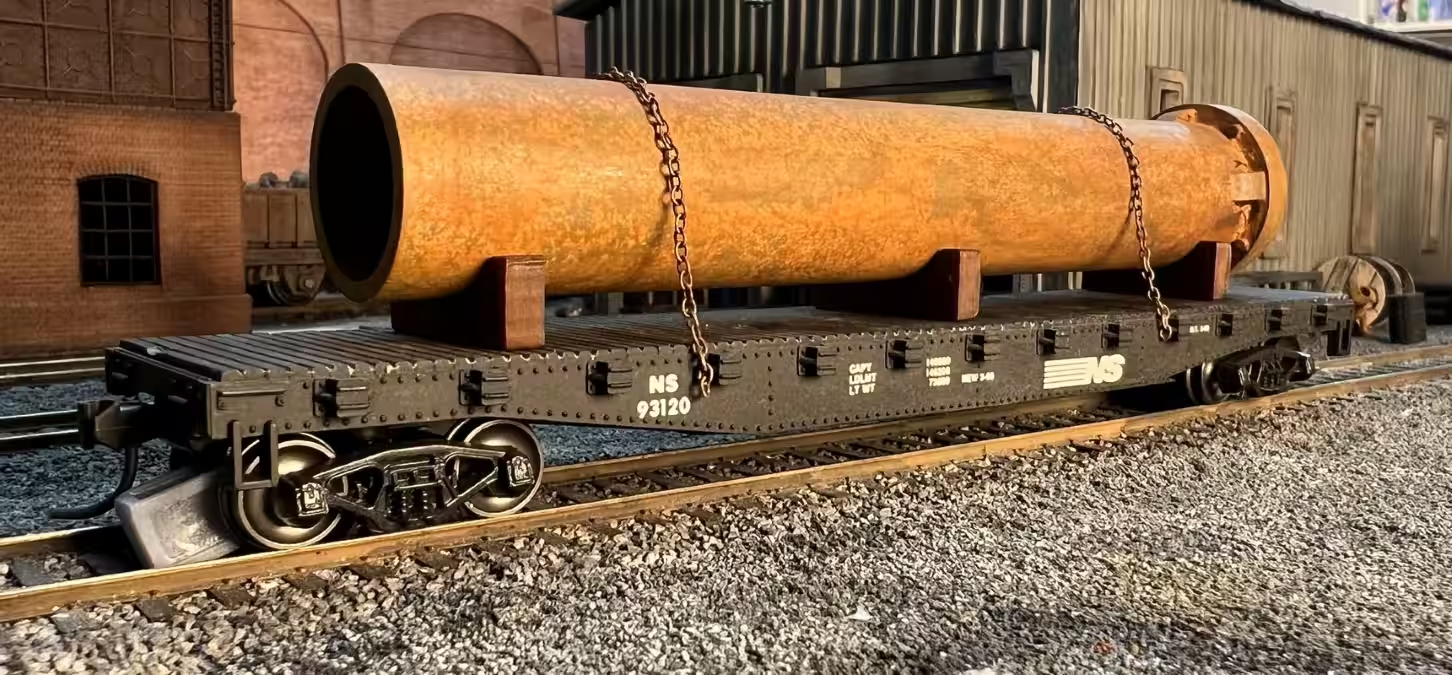
But with so many options available — from lumber to machinery to military equipment — choosing the right loads for your layout can feel overwhelming. This guide breaks down the main categories of HO scale flat car loads, explains how to choose loads that make operational sense for your railroad, and covers the practical questions about fit and compatibility that come up most often.
Why Flat Car Loads Matter More Than You Might Think
Model railroaders often focus their detailing budget on locomotives, structures, and scenery — and leave rolling stock loads as an afterthought. This is a mistake, especially for layouts with an industrial or freight operations focus.
Loads do several things simultaneously. They give your freight trains visual weight and purpose — a string of empty flat cars looks like stored equipment, while loaded flat cars look like a working railroad. They tell the viewer what industries your railroad serves. And for operating layouts, loads give you a reason to switch cars: something has to be delivered somewhere specific.
On a steel mill layout in particular, the loads are the story. A ladle moving from the furnace to the casting area, a replacement gear arriving for the maintenance shop, a finished slab heading to the rolling mill — each of these is a scene with operational logic built in.
The Main Categories of HO Scale Flat Car Loads
Industrial and Heavy Equipment
Industrial equipment loads represent machinery being transported between manufacturing facilities, construction sites, or for maintenance and replacement. This category includes generators, transformers, large gears, winch motors, pumps, and similar heavy plant equipment.
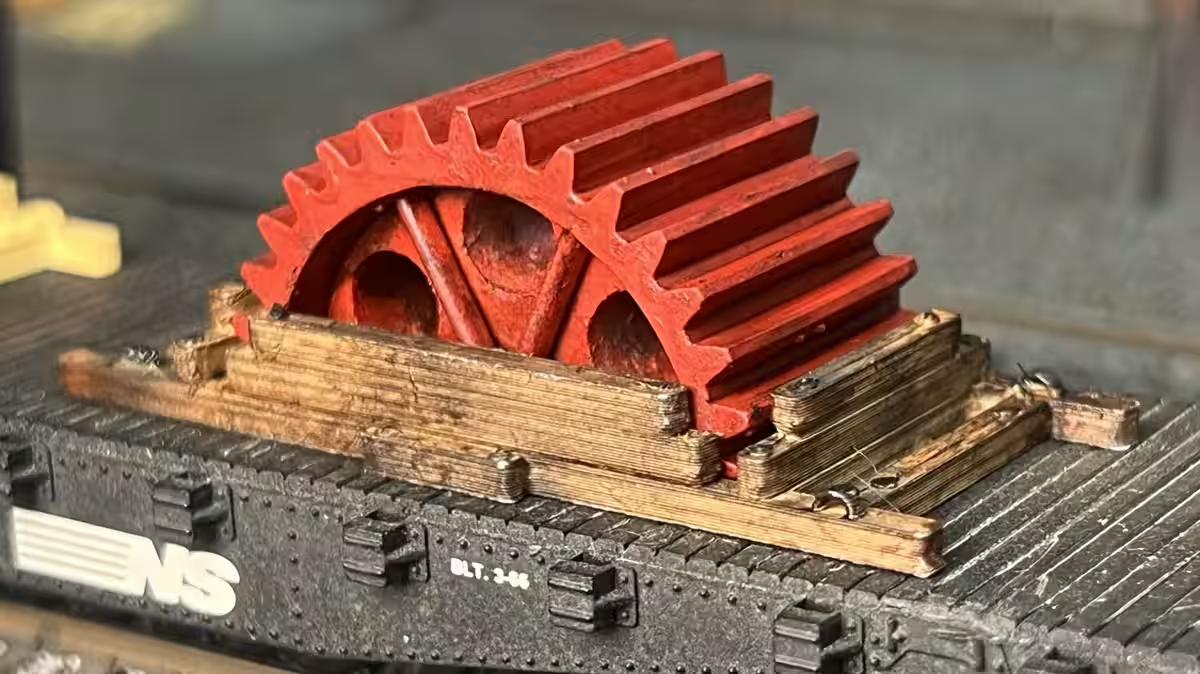
These loads work for almost any era of modern railroading and any industrial prototype. A generator or large gear load doesn’t tie you to a specific industry — it could be going to a factory, a power station, a mine, or a construction project.
They’re also visually strong. A large piece of industrial equipment on a flat car with visible transport cradles and tie-down chains reads immediately as something important and heavy being moved carefully. That visual weight translates directly to layout interest.
Steel Mill and Metal Industry Loads
Steel mill loads are among the most specialised and operationally interesting flat car loads available. They include ladles and cauldrons for molten metal transport, furnace hoods and heat shields, steel slabs and ingots, structural beams and girders, and specialist maintenance equipment.
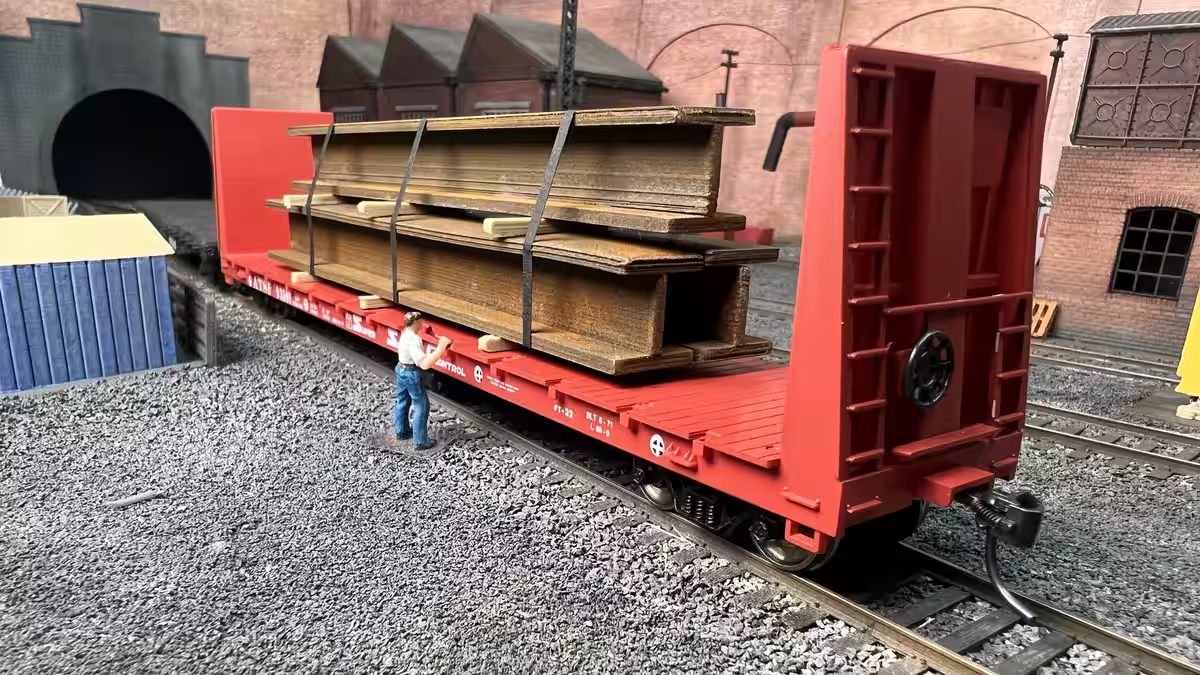
What makes steel mill loads particularly good for model railroading is that they generate constant internal movement. A real steel mill has dozens of rail moves per day just within the plant boundary — loads moving between furnaces, casting areas, rolling mills, and storage yards. This gives an operating layout almost unlimited switching scenarios.
Steel mill loads also have a distinctive visual character — heavy, industrial, weathered, purposeful — that immediately identifies what kind of railroad you’re modeling.
Lumber and Wood Products
Lumber loads are among the most traditional flat car loads in North American railroading and remain popular with modelers. A properly loaded lumber flat car — stacked boards with visible stakes and tie-down chains — is an iconic image of freight operations across multiple eras.

Lumber loads work best in the steam and transition eras and are ideal for layouts serving Pacific Northwest or Southern US timber industries. They’re less appropriate for post-1980s modern layouts where most lumber moves in enclosed boxcars or autorack-style carriers.
Military and Government Equipment
Military equipment loads — tanks, armoured vehicles, artillery pieces — are popular with modelers and well served by the hobby market. They work specifically for World War II era layouts or layouts set near military bases, and are less appropriate for civilian industrial layouts.
Construction Equipment
Bulldozers, excavators, cranes, and construction plant represent loads that were and continue to be transported by rail to construction projects. These loads work well for transition era and modern layouts and are particularly good for modeling contractor sidings or construction branch lines.

Cable Drums and Utility Loads
Cable drums — the large reels used for power cables, telegraph wire, and industrial cable — are an often-overlooked load that works across multiple eras and industries. A single large cable drum on a flat car with a pallet and cradle is a realistic, compact load that fits easily on shorter cars.
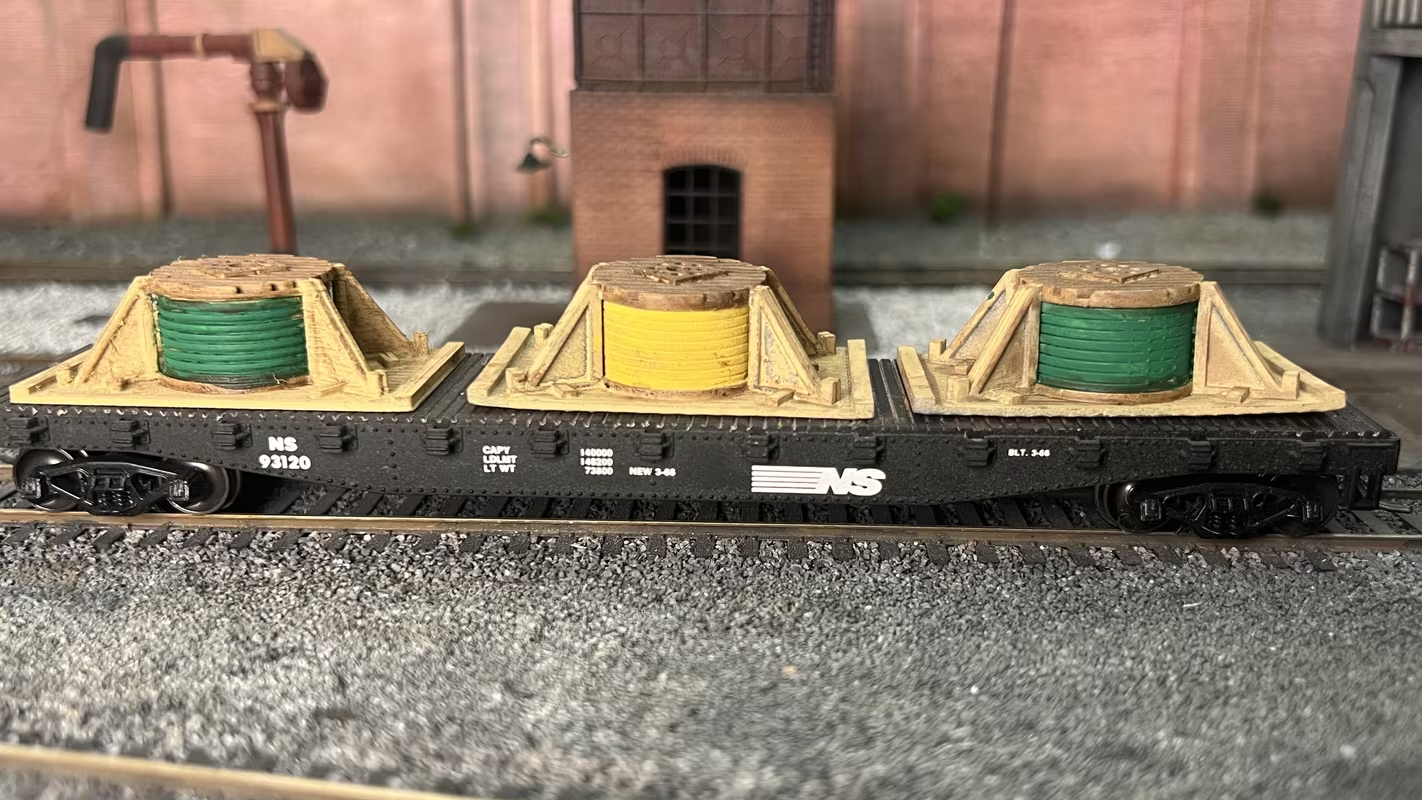
Utility loads in general (transformers, cable drums, pipe sections) are good choices for modern layouts as they represent the kind of industrial freight that moves by rail regularly in the current era.
Choosing Loads That Make Sense for Your Railroad
The most important question when choosing flat car loads isn’t ‘what looks good?’ — it’s ‘what would my railroad actually carry?’
Before buying loads, spend a few minutes thinking about:
What Industries Does Your Railroad Serve?
A layout based around a steel mill should have steel mill loads, industrial equipment, and scrap material. A layout serving a timber region should have lumber and log loads. A transition-era layout set in the industrial Midwest might have a mix of steel, machinery, and manufactured goods.
Loads that don’t match your industries break the illusion. A ladle on a layout that has no steel mill anywhere nearby raises an immediate question in the viewer’s mind.
What Era Are You Modeling?
Load types changed significantly across different eras of railroading. The 1940s-1960s transition era saw a huge variety of flat car loads as manufacturing and construction boomed. The modern era has seen many load types shift to containers or enclosed cars, but heavy industrial equipment still moves on flat cars.
Steel mill loads are notably era-flexible — steel mills were active from the late 1800s through to the present day, and the basic equipment types (ladles, slabs, structural steel) remained consistent throughout.
What Scale of Operation Are You Modeling?
A small branch line layout doesn’t need heavy industrial loads — it might have a single flat car with a local delivery of equipment or utility materials. A large classification yard layout can justify almost any load type passing through. Match the scale and variety of your loads to the scale of operation your layout implies.
Practical Guide: Flat Car Compatibility
One of the most common questions about flat car loads is simply: will this fit my car? Here’s what to check:
Car Length
Most HO scale flat cars fall into a few standard length categories. Knowing your car’s deck length in scale feet tells you immediately what load sizes will work.
- 40ft flat cars: common in steam and early transition era, shorter deck suits smaller loads
- 50ft flat cars: the most common modern flat car, suits most industrial loads
- 60-89ft flat cars: heavy duty cars for oversized loads, less common in smaller layouts
Deck Height and Stake Pockets
Some loads use cradles or blocking that need to clear the stake pockets along the car sides. Check that your load’s cradle or base width leaves the stake pockets visible — if the load completely covers them it can look unrealistic and may not sit flat.
Load Overhang
A small amount of overhang beyond the car ends is realistic and common with long loads. Excessive overhang — more than about 10-15% of car length — starts to look wrong and can cause coupling problems on curves.
Compatibility Note: All ScaleRail3D loads include dimensions on the product page. The majority are designed for standard 40-50ft HO scale flat cars and sit within the deck area with appropriate cradles. If you’re unsure whether a specific load will work with your car, get in touch before ordering.
Operating Your Flat Car Loads
Loads add the most value to a layout when they’re part of an operating scheme — not just scenery sitting permanently on a car.
A few approaches that work well:
Removable Loads
Design your loads to sit on the car without being glued in place. This lets you run the same car loaded or empty depending on the operational scenario. An empty flat car at an industry siding waiting to be loaded is just as realistic as a loaded car in transit.
Most ScaleRail3D loads are designed as removable loads — you can use removable securing mediums such as Blu-Tack, Elmers Fun-Tak etc. A small amount will keep the model in place without damaging the rail car.
Load Cards
Some operators use a simple card system — each car has a small card designating what load it should carry and where it’s going. This turns your load collection into an operating asset and gives purpose to every car switch.
Staging Scenes
A yard or industry siding with a mix of loaded and empty cars, cars being loaded or unloaded, and maintenance equipment nearby tells a much richer story than a train simply passing through. Use your flat car loads to build scenes that imply activity even when nothing is moving.
The ScaleRail3D Flat Car Load Range
ScaleRail3D produces HO scale flat car loads designed specifically for industrial and steel mill layouts. All loads are precision 3D printed and available in unpainted finish for full customisation, or in our Ready to Run range with authentic material finishes requiring no painting.
Browse the full range:
If you have questions about which loads would suit your specific layout or car types, use the contact page — I’m happy to help you choose.
