
How to Build a Realistic HO Scale Steel Mill Scene
Why Steel Mills Make Great Model Railroad Subjects
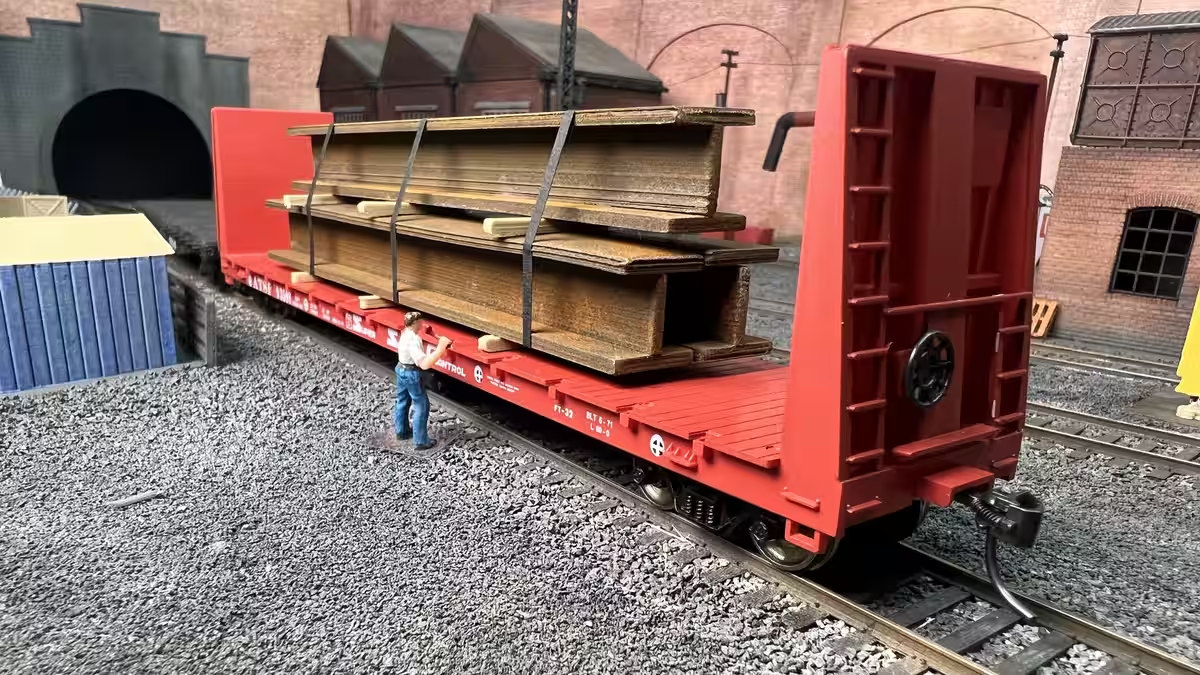
A steel mill is one of the most operationally rich industries you can model on an HO scale layout. Unlike a grain elevator or lumber yard — where cars arrive loaded and leave empty — a working steel mill generates constant internal movement. Ladles move between furnaces and casting areas. Slabs transfer from rolling mills to cooling beds. Scrap gondolas make short trips between collection points and the melt shop.
That internal churn means a steel mill layout gives you genuine operating purpose. Every car movement has a reason. Every load tells part of a larger industrial story.
This guide covers what makes a steel mill scene look authentic in HO scale, which loads to prioritise, and how to arrange them for maximum visual impact and operational logic.
Understanding Real Steel Mill Rail Operations
Before you start placing loads on flat cars, it helps to understand what real steel mills actually moved by rail — and why.
Integrated steel mills (the kind most common in the 1950s-1980s era favoured by modelers) handled several distinct rail movements:
- Raw material inbound: iron ore, coal, and limestone arriving by gondola or hopper
- Internal transfers: molten iron in torpedo cars or ladles moving between blast furnace and basic oxygen furnace
- Finished product outbound: steel slabs, coils, beams, and plate leaving on flatcars or gondolas
- Maintenance and replacement: furnace components, industrial equipment, and replacement parts arriving on flatcars
- Scrap: internal scrap and bought scrap arriving by gondola for re-melting
The maintenance and replacement category is where the most visually interesting flat car loads appear — and where ScaleRail3D products are specifically designed to help. Furnace hoods, ladles, slab loads, and heavy industrial equipment like gears and generators represent the kind of specialist freight that gives a steel mill its distinct character.
The Essential HO Scale Steel Mill Loads
Ladles and Cauldrons

A steel mill ladle is the defining image of steelmaking. These cauldron shaped vessels create an instant statement with their enormous size. On a model railroad, a ladle load on a heavy-duty flatcar immediately signals that this is a working mill, not just scenery.
In HO scale, ladles work best on 40-50ft flat cars with visible cradle supports. Position them toward the middle of longer cars for realistic weight distribution.
Furnace Hoods and Heat Shields
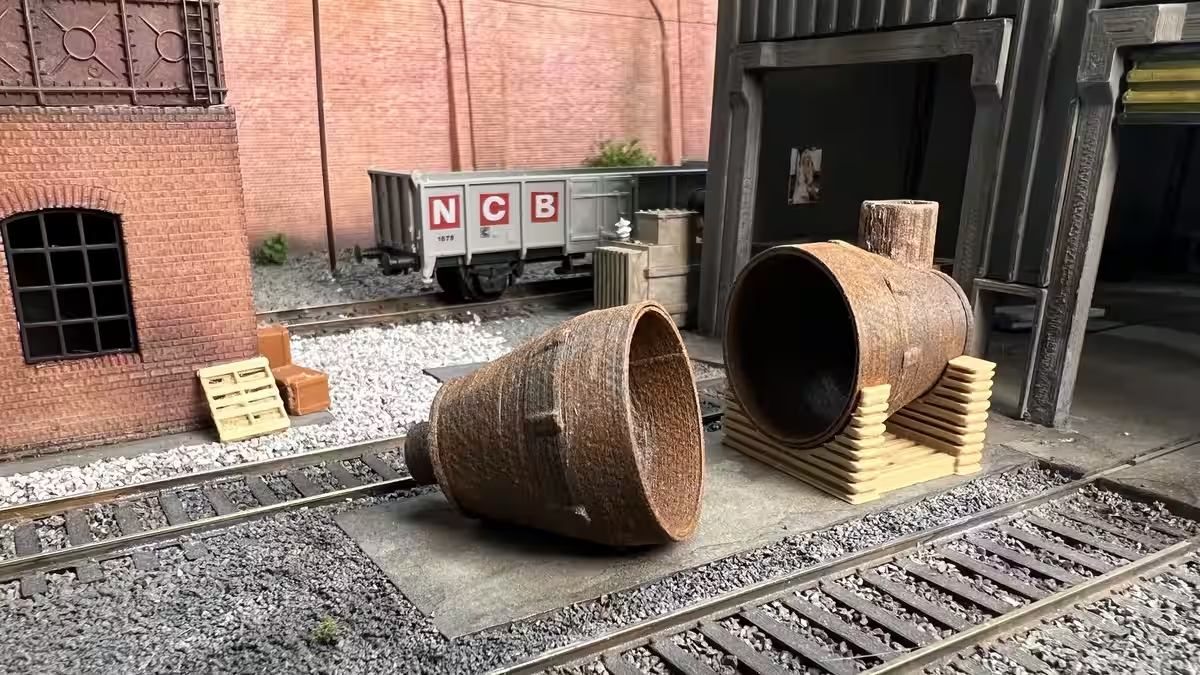
Furnace hoods are large, bulky components that require specialist transport. On a real railroad they’d travel on a heavy flatcar with blocking and tie-downs, often as a single-car special movement. On your layout, one flatcar carrying a furnace hood creates an immediate focal point — something clearly important is happening. They make an instant statement in your HO scale steel mill scene.
Slab and Ingot Loads

Steel slabs and ingots represent finished or semi-finished product moving out of the mill for further processing. They’re ideal for gondola loads — stack multiple slabs in a gondola with appropriate blocking, or use a single ingot mold on a flatcar to represent an early-stage casting movement.
Slab loads work particularly well on outbound tracks and interchange sidings, representing product heading to a rolling mill or fabrication plant.
Industrial Equipment and Maintenance Loads
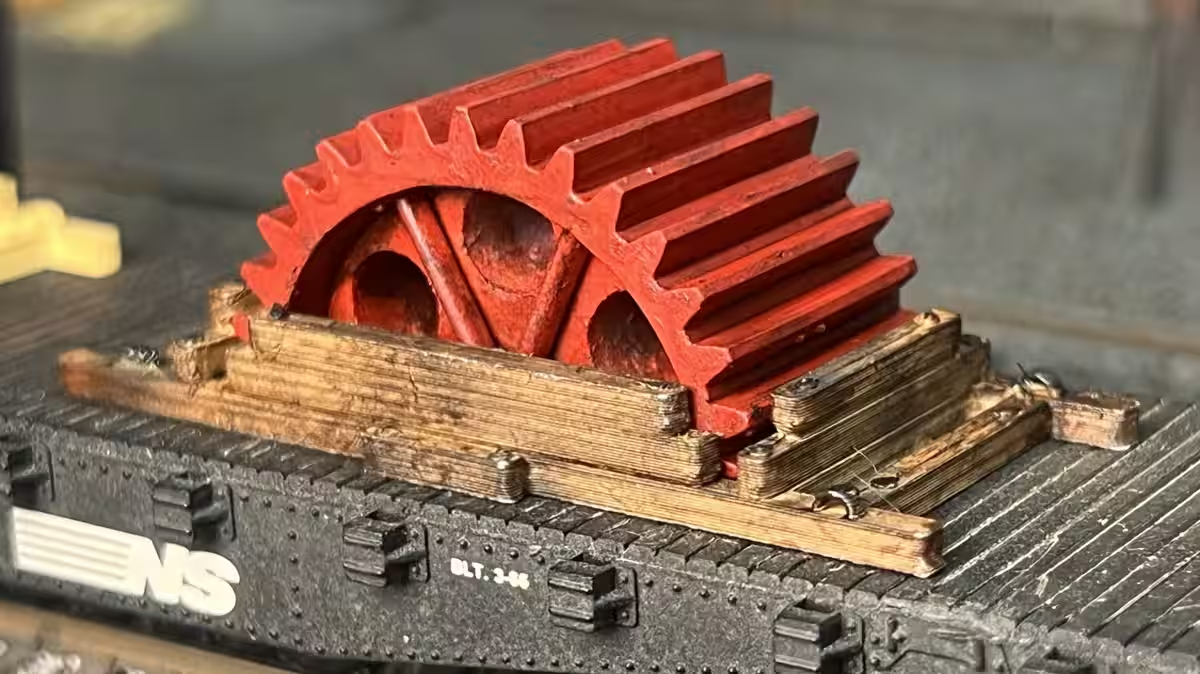
Large gears, generators, winch motors, and similar equipment represent the maintenance side of a steel mill — replacement parts arriving for the plant’s constant upkeep. These loads are versatile because they can appear anywhere on the property and work in any era of modern steelmaking.
A flatcar with a large gear and custom transport cradle says ‘this mill is operational and maintained’ in a way that few other loads can.
Arranging Your Steel Mill Scene for Realism
Use Multiple Tracks for Operational Logic
A realistic steel mill layout needs at least three distinct track functions: inbound/raw material tracks, internal transfer tracks, and outbound/finished goods tracks. Even on a small layout, separating these visually and operationally creates the sense of a working industrial system.
Mix Loaded and Empty Cars
Nothing breaks the illusion of a working mill faster than all cars sitting loaded at once. Real operations involve constant movement — some cars loading, some unloading, some waiting empty. Aim for roughly half your visible cars to be empty or partially loaded.
Consider Car Types
Steel mills used a specific mix of equipment. Heavy-duty flatcars for ladles, hoods, and equipment. Gondolas for slabs, scrap, and loose material. Torpedo cars for molten iron. Hoppers for raw materials. Using the right car type for each load adds authenticity that modelers notice and appreciate.
Weathering Tells the Story
A steel mill environment is harsh — heat, smoke, rust, and grime accumulate quickly. Your rolling stock and loads should reflect this. Heavy rust weathering, heat discolouration on ladles, grime buildup on flat car decks, and oxide staining on steel loads all reinforce the industrial atmosphere.
For 3D printed loads, start with a dark primer, build up rust tones with sponge stippling, and finish with powders for dust and scale effects. Even simple weathering effects will make a huge difference to your HO scale steel mill scene. Check out our painting guide here.
Building Your Steel Mill Piece by Piece
You don’t need to model a full integrated steel mill to capture the atmosphere. Even a small industrial siding with two or three purposeful loads creates the impression of a larger operation just out of sight.
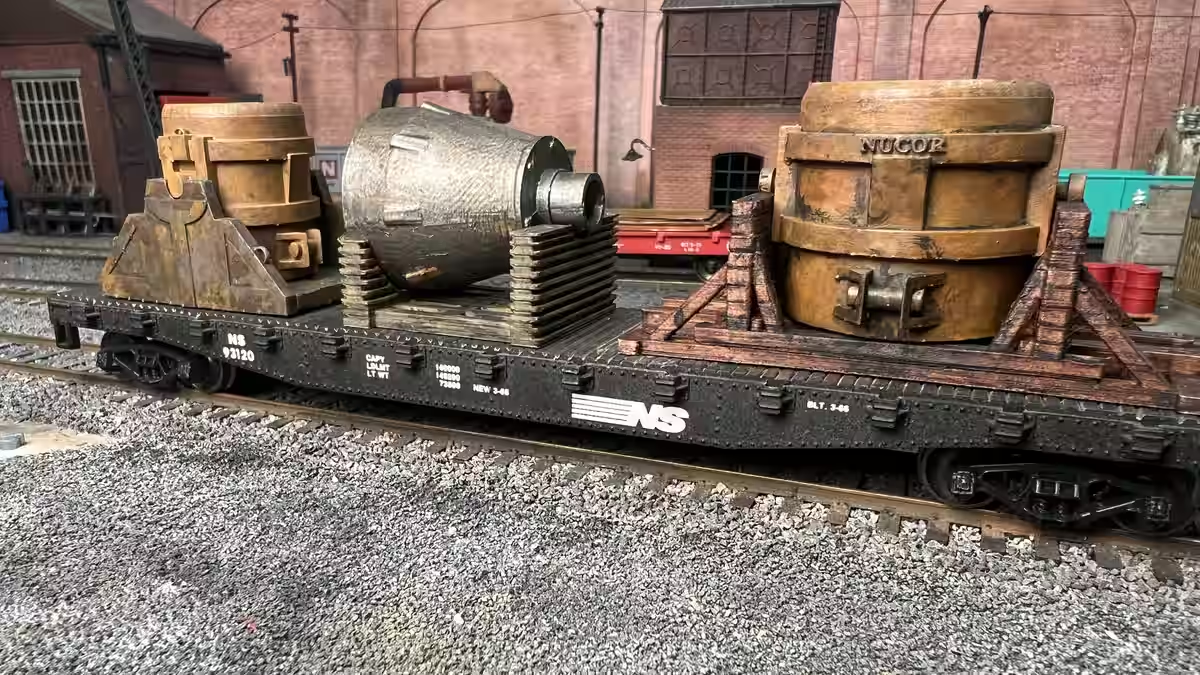
A good starting point for an HO scale steel mill scene:
- One flatcar with a ladle or cauldron load — immediate visual identity
- One gondola with slab or ingot loads — suggests outbound product movement
- One flatcar with an equipment or maintenance load — adds operational depth
- One or two empty cars — realistic operational balance
From there, add structures, personnel figures, and ground details to build the scene around your rolling stock. The loads anchor everything — they tell the viewer what this place does.
ScaleRail3D Steel Mill Loads
All ScaleRail3D steel mill loads are designed specifically for HO scale (1:87) and sized for standard 40-50-60ft flat cars and gondolas. They’re supplied unpainted (or in our Ready to Run range with authentic material finishes) and designed to reward careful painting and weathering.
Browse the full range at scalerail3d.com/ho-scale-steel-mill/ to build out your HO scale steel mill scene.
