
Painting & Weathering 3D Printed Model Railroad Parts (HO Scale Guide)
Painting and weathering 3D printed model railroad parts can dramatically improve realism — especially for industrial scenes where surface texture, wear, and grime matter.
This guide focuses on HO scale 3D printed parts, with practical, modern techniques that work for car loads, industrial details, buildings, and steel mill equipment. You don’t need expensive tools or years of experience — just the right process and a bit of patience.
All examples and recommendations here are based on real, in-use layouts and parts designed specifically for painting and weathering on operating HO scale railroads.
Understanding 3D Printed Model Parts
3D printed parts behave differently than traditional injection-molded plastic kits. Understanding those differences makes painting easier — not harder.
Common characteristics of 3D printed parts
- Layer lines may be visible under certain lighting
- Fine surface texture helps paint adhesion
- Small details are often sharper but more delicate
- Parts are typically lighter than cast metal loads
Not every surface needs to be perfectly smooth. In fact, subtle texture often improves realism, especially for industrial loads, steel components, and weathered equipment.
Designed for painting
ScaleRail3D parts are designed with:
- Paint-friendly surface geometry
- Minimal visible supports
- Flat contact areas for secure mounting
- Removable loads where appropriate for operations
This allows you to focus on finishing, not fixing the model.
Surface Preparation
Good paint results start with simple prep. Most 3D printed parts require less cleanup than you might expect.
Some industrial loads, such as removable steel mill ladles and ingot molds, are designed to be painted and weathered separately before being placed on flat cars or service trains. This makes surface prep and finishing much easier and allows you to swap loads during operations.
Removable Steel Mill Ladles → HO Scale Steel Mill Cauldron
Ingot Molds → HO Scale Ingot Mold
Basic cleanup
- Remove visible support nubs with a sharp hobby knife
- Lightly sand only where necessary
(220–320 grit is usually sufficient) - Avoid aggressive sanding on fine details
If a small gap or seam remains, a tiny amount of filler putty can be used — but most parts won’t need it.
Washing the part
Before painting:
- Wash the part in warm water with mild dish soap
- Gently scrub with a soft brush
- Rinse thoroughly
- Allow to fully dry
This removes oils, dust, and residue that can interfere with primer adhesion.
Wearing disposable gloves after washing prevents skin oils from transferring back onto the part.
Priming 3D Printed Parts
Priming is not optional — but it also doesn’t need to be complicated. A good primer:
- Reveals surface detail
- Improves paint adhesion
- Helps unify color across different materials
Primer recommendations
- Matte or satin primer works best
- Grey is the most versatile color
- Black is useful for darker industrial finishes
- White is best for light or bright final colors
Apply primer in light, even passes, allowing each coat to dry before the next. Avoid flooding the part — detail comes from restraint, not coverage.
If the primer looks slightly textured, that’s fine. On industrial models, it often enhances realism.
Painting Techniques
There’s no single “right” way to paint model railroad parts — but there are reliable methods that produce consistent results.
Brush painting
Brush painting works well for:
- Small parts
- Detail painting
- Touch-ups and accents
Use thin coats and let each layer dry completely. Multiple light coats will always outperform one heavy coat.
Airbrushing (recommended, not required)
Airbrushing provides:
- Smooth base coats
- Consistent color coverage
- Better control for weathering layers
You don’t need a full compressor setup. Compact, portable airbrush systems are more than capable for HO scale work.
Larger industrial loads like furnace hoods, heavy equipment, and steel mill hardware benefit from thin, layered paint coats to preserve surface texture. These parts are often focal points on a train, so subtle color variation adds realism without over-weathering.
Furnace Hoods → HO Scale Furnace Hood with Custom Cradle
Paint types
- Acrylic paints are beginner-friendly and forgiving
- Enamels offer durability but require longer drying times
- Use flat or satin finishes for most industrial parts
Gloss finishes are rarely appropriate unless used as an intermediate step for decals or washes.
Weathering Industrial Loads
Weathering is where 3D printed parts truly come to life — especially for steel mills, car loads, and heavy industry.
Common weathering techniques
- Dry brushing to highlight edges and raised detail
- Washes to bring out recesses and depth
- Powders or pigments for rust, dust, and grime
- Layering different tones instead of one uniform color
Steel mill loads benefit from variation, not uniformity. Slight differences between parts suggest real-world handling, heat exposure, and wear.
Less is more
It’s easy to over-weather. Step back often and view the model at normal layout distance, not under magnification.
If it looks good from three feet away — it’s doing its job.
Sealing & Protecting Your Work
Once painting and weathering are complete, sealing the model protects your finish and evens out sheen.
When to seal
- After weathering powders or pigments
- Before handling removable loads frequently
- Before placing parts into active switching service
Clear coat recommendations
- Matte clear for most industrial and steel mill parts
- Satin clear for lightly worn equipment
- Avoid gloss unless intentionally modeling freshly painted or coated components
Apply clear coats lightly. Heavy clear layers can soften detail and reduce contrast created by weathering.
A light seal locks everything in place while preserving texture and realism.
Painted Industrial Loads in Context
Seeing painted loads in place on a layout helps guide color choice, weathering intensity, and placement. Industrial scenes reward subtlety — heat staining, grime buildup, and variation tell the story better than heavy effects.
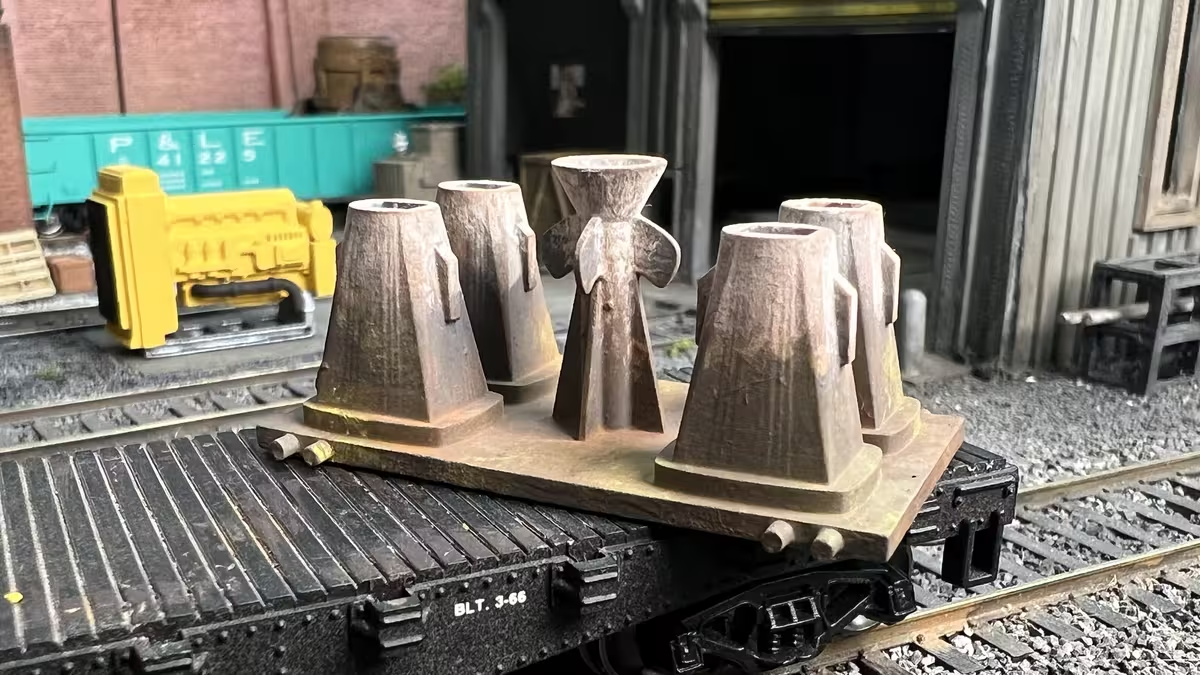

Weathered steel mill loads staged on flat cars within an active industrial scene. Subtle color variation and restrained weathering reinforce scale and realism.
Using Painted Loads on an Operating Layout
Painted and weathered loads don’t just look better — they make operations feel purposeful.
Because many steel mill loads are removable, painted parts can be rotated between cars to represent different stages of production. This works especially well with ladles, slabs, and ingot molds, allowing a small fleet of cars to support multiple operating scenarios.
Steel Mill Loads → HO Scale Steel Mill Car Loads
Operational ideas
- Swap clean and weathered loads to represent inbound vs outbound traffic
- Rotate removable loads between cars to create variety
- Stage loaded and empty cars differently in yards or mills
Steel mill scenes especially benefit from visual logic:
- Clean slabs outbound
- Heavily weathered ingot molds near casting areas
- Heat-stained ladles close to furnaces
These small choices help tell a story without adding complexity.
Real-World Examples
The best reference for painting and weathering is the real world. Study:
- Industrial photography
- Railfan images
- Prototype steel mill operations
- Layouts built by other modelers
Seeing parts in context helps guide color choice, weathering intensity, and placement.
Many of the techniques described here are demonstrated on real layouts using ScaleRail3D parts, where painted loads move through mills, yards, and industrial spurs as part of active operations.
Final Thoughts
Painting 3D printed model railroad parts doesn’t require perfection — it rewards consistency, restraint, and observation.
Start simple. Experiment. Step back often.
Well-painted loads add motion, purpose, and realism to any HO scale layout — especially industrial scenes where wear and variation are expected, not flaws.
Explore HO Scale Industrial Loads
If you’re building or expanding an industrial scene, explore our range of HO scale steel mill car loads and industrial detail items, designed specifically for painting, weathering, and operation on real layouts.
