
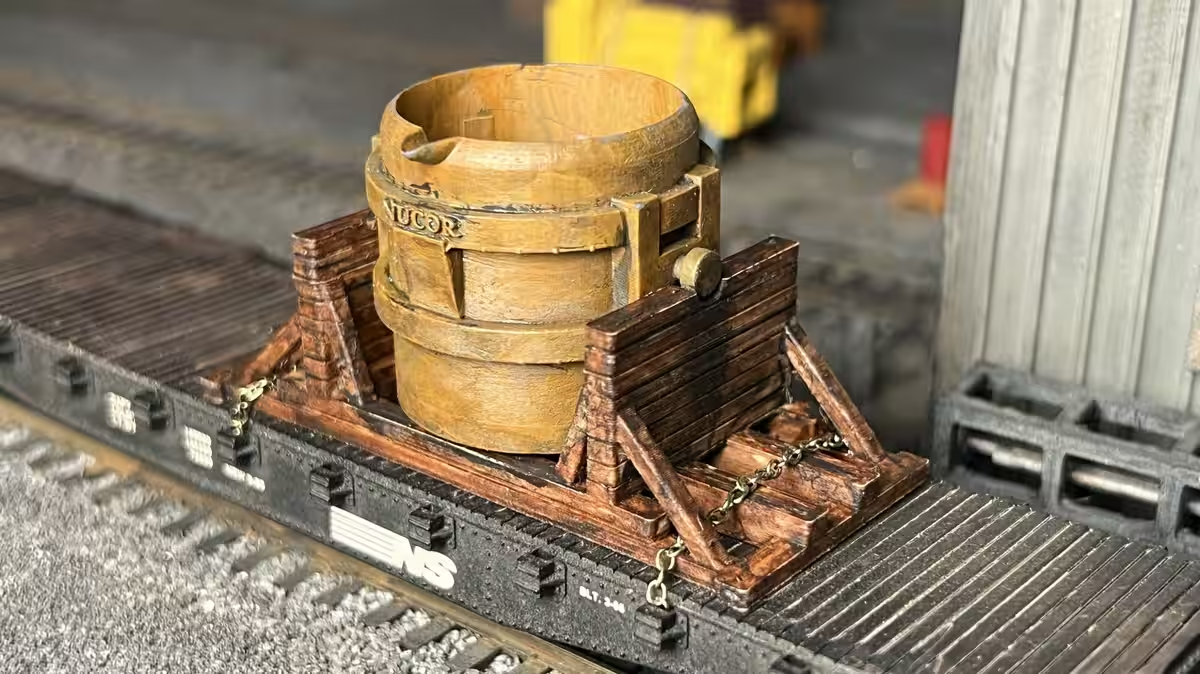
FDM vs. Resin: A Modeler’s Guide to 3D Printed HO Scale Accessories
Introduction
“3D printed” gets used as if it’s one single thing, but it isn’t. Two HO scale parts can both be described as 3D printed and still differ enormously in detail, strength, weight, and how they take paint — because they were made on completely different kinds of printer, using completely different processes. If you’ve ever wondered why one 3D printed detail part feels crisp and glass-smooth while another has visible ridges, or why some parts are more brittle than others, the answer almost always comes down to FDM versus resin.
This guide explains what each process actually does, why a creator (like ScaleRail3D) might choose one over the other for a given part, and what that means for you as a modeler — from painting to storage to picking the right part for the job.
How 3D Printing Actually Works
FDM (Fused Deposition Modeling)
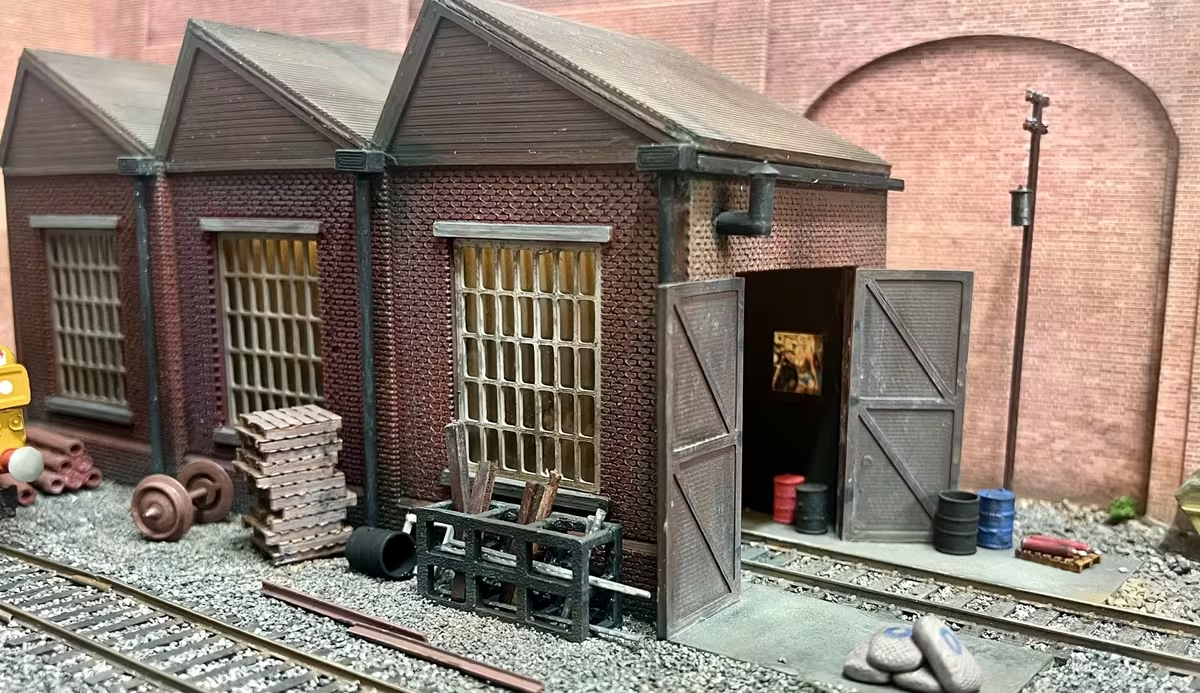
This custom designed workshop was created using an FDM printer
FDM printing builds a part by melting a thin strand of plastic filament and extruding it layer by layer, like a very precise hot glue gun following a 3D blueprint. It’s the most common and affordable form of 3D printing, and it’s excellent for parts that need strength, size, or a specific material property — like the iron-infused PLA used for some of the ScaleRail3D naturally-rusting models.
The trade-off is resolution. Because each layer is a physical bead of melted plastic, very fine detail or very small parts can show visible layer lines unless the model is designed with that limitation in mind.
Resin (SLA/MSLA)
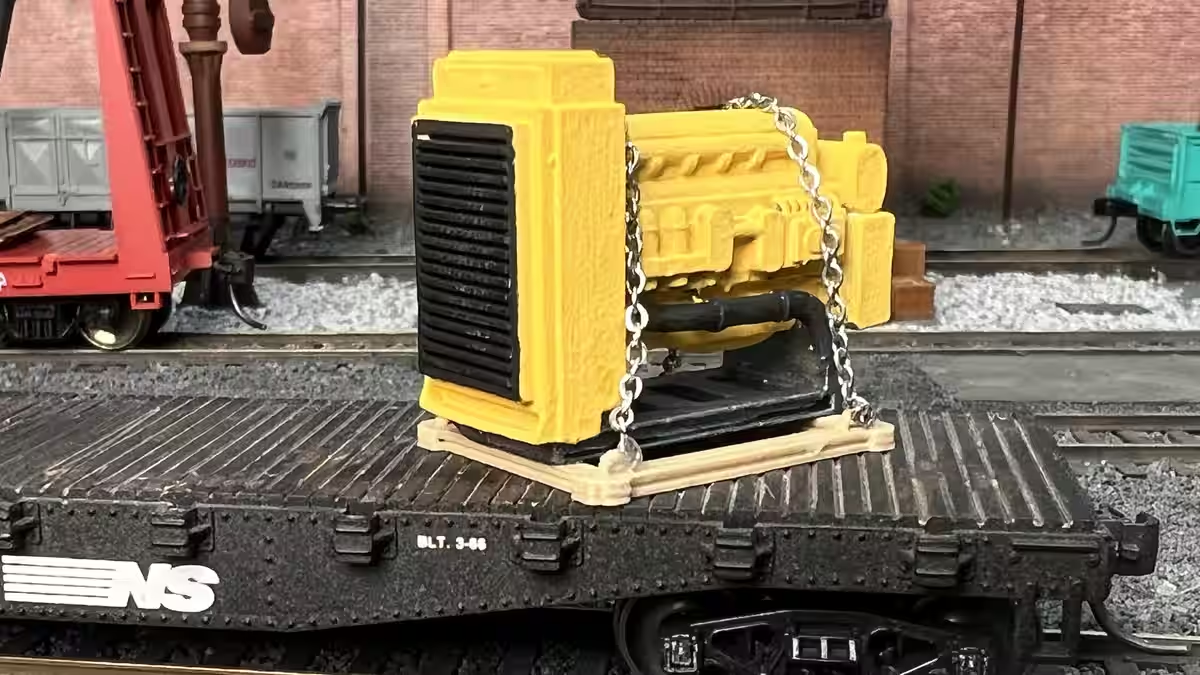
This industrial generator was crated using a Resin printer
Resin printing works completely differently: a liquid photopolymer resin is cured, layer by layer, using light from a screen or laser. Because the “print head” is light rather than a physical nozzle, resin printers can achieve dramatically finer detail — sharp edges, delicate framework, tiny bolts and rivets that would be difficult or impossible to reproduce with FDM at HO scale.
The trade-off runs the other way: resin parts are generally more brittle than FDM parts, and the process is slower and more involved to finish (parts need to be washed and cured after printing before they’re ready to use).
FDM vs. Resin: Which Is Better for HO Scale?
Neither one is simply “better” — they’re suited to different jobs, which is exactly why ScaleRail3D uses both, and sometimes both on the same product.
Detail and Surface Finish
For anything with fine surface detail — rivets, hatch covers, delicate piping, or intricate cradles and bracing — resin is usually the better choice. The finish is smooth enough to prime and paint straight from the printer with very little cleanup.
Strength and Durability
For larger parts, anything that needs to survive being handled a lot, or parts that benefit from a specific material property, FDM has the edge. It’s also the more practical choice for bigger pieces, since large resin prints take longer to cure evenly and are more prone to warping.
Best Use Cases for Each
As a rough rule of thumb: small, highly detailed components (ladles, fine machinery, delicate brackets) tend to be resin; larger structural loads, bulk detail packs, and anything that needs extra toughness tend to be FDM. Some products — like multi-part loads with both a large structural piece and small fine details — use both processes for different components of the same kit.
What “Comes Unpainted” Actually Means
Almost everything in the ScaleRail3D range ships unpainted, regardless of whether it’s FDM or resin. That’s deliberate — a factory-applied paint job can’t account for the specific era, weathering style, or color scheme your layout needs, so the model arrives ready for you to finish it your way. The product photos showing painted and weathered versions are there to show what’s achievable, not what ships in the box — the exception is the Ready To Run (RTR) range, which is delivered finished so it can go straight onto the layout with no extra work.
Special Materials: Iron-Infused PLA and Real Rust

These H Beams are printed on a FDM printer using iron infused PLA to enable a real rust finish
A few products in the Ready To Run range use a specialty FDM filament: PLA infused with actual iron particles. Parts printed in this material develop genuine surface oxidation over time — real rust, not a painted effect — which is part of why those specific listings can promise a finished, weathered look with zero painting required. It’s a good example of how the choice of material, not just the printing process, shapes what a finished part can do.
Caring for 3D Printed Model Railroad Parts
A little care goes a long way with any 3D printed part, FDM or resin:
- Keep parts out of direct, prolonged sunlight or hot cars. Both PLA and resin can soften or warp with sustained heat exposure — the same rule that applies to plastic rolling stock generally.
- Use plastic-safe glues. Cyanoacrylate (superglue) works well on both FDM and resin parts; test any solvent-based cement on a hidden spot first, since formulations vary.
- Prime before painting for the most reliable results, especially on resin parts, which can be slightly slicker than FDM straight off the printer.
- Handle large, thin resin parts gently until they’re fixed in place — brittleness is the main trade-off for that fine detail.
Frequently Asked Questions
Is resin or FDM stronger? FDM parts are generally more impact-resistant and less brittle, which is why larger structural loads and parts that will be handled often tend to be printed in FDM rather than resin.
Why do some models cost more than others if they’re “just 3D printed”? Print time, material cost, and post-processing all vary significantly between FDM and resin, and between simple and highly detailed designs — a small, highly detailed resin part can take longer to produce and finish than a larger FDM piece.
Can I paint over the natural rust on iron-infused PLA parts? Yes — the real-rust finish is meant to look good as-is for a quick, no-painting-required option, but it also takes acrylic paint and weathering products normally if you want to customize it further.
Do 3D printed HO scale parts need special glue? Not usually — standard plastic modeling cements and cyanoacrylate (superglue) both work on FDM and resin parts. As always, test on a hidden area first if you’re unsure about a specific glue and material combination.
Explore the Range
Browse the full ScaleRail3D range to see FDM, resin, and Ready To Run parts side by side — and see the Ready To Run collection specifically for models finished at the factory and ready to place straight onto your layout.
