
HO Scale Gondola Loads
Introduction
Flat cars get all the attention in HO scale car-load guides. Gondolas, those open-top, low-side cars built to haul the ugly, heavy, and awkward, usually get a single sentence and a photo of scrap metal. That’s a shame, because a well-loaded gondola can be one of the most convincing pieces of rolling stock on a layout, and it’s one of the easiest ways to add visual variety to a train that’s otherwise all boxcars and hoppers.
This guide covers what actually goes in an HO scale gondola, how to choose loads that make sense for your era and industry, and how gondola loads differ from flat car loads in the first place.
Why Gondola Loads Get Overlooked
Gondolas don’t have the same “showcase” quality as a flat car carrying a single dramatic load — a transformer, a boat, a piece of construction equipment. Instead, gondolas usually carry bulk or multiple-piece loads, which makes them look empty or unconvincing if they’re loaded with the wrong thing, or left empty entirely. An empty gondola isn’t wrong (plenty of them run empty in both directions), but a train of empty gons in a row reads as “unfinished layout,” not “prototypical operation.”
What Real Gondolas Haul
Pipe and Tubular Loads
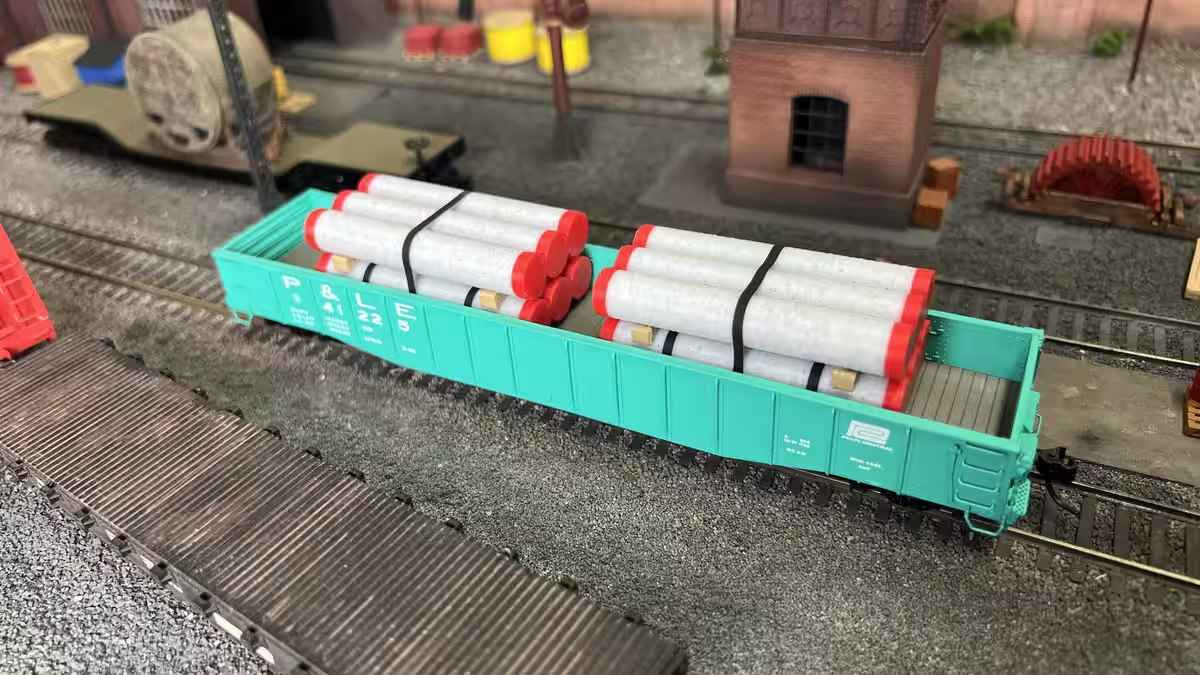
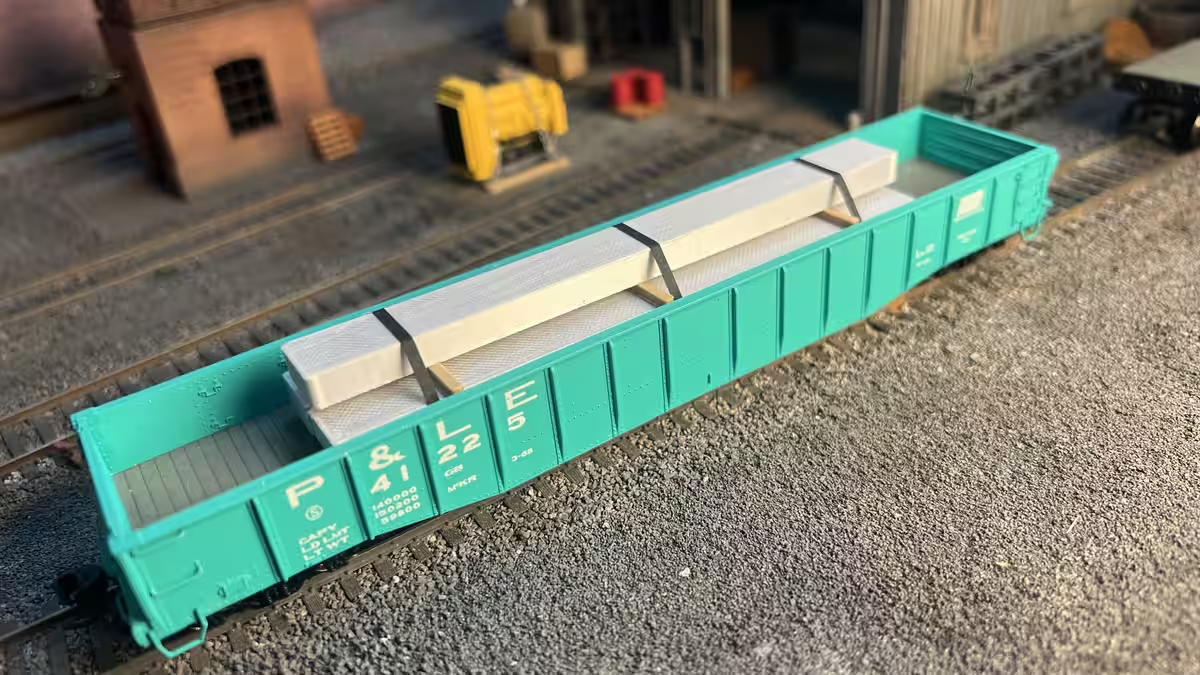
Large-diameter pipe is one of the most common and most photogenic gondola loads, and one of the few load types that works equally well on a flat car or in a gondola — the difference is mostly about pipe diameter and how the railroad wants it blocked. Pipe destined for pipelines, water infrastructure, or heavy industrial projects is typically stacked and blocked with dunnage between layers, with strapping simulating the transport bracing used on the prototype.
This is also one of the easiest gondola loads to model convincingly, because the visual interest comes from the stacking pattern and the blocking detail rather than from painting a large single casting. A stack of pipe in three or four different lengths, mixed across a short train, reads as a realistic pipe shipment rather than a repeated toy.
Scrap Metal and Recyclables
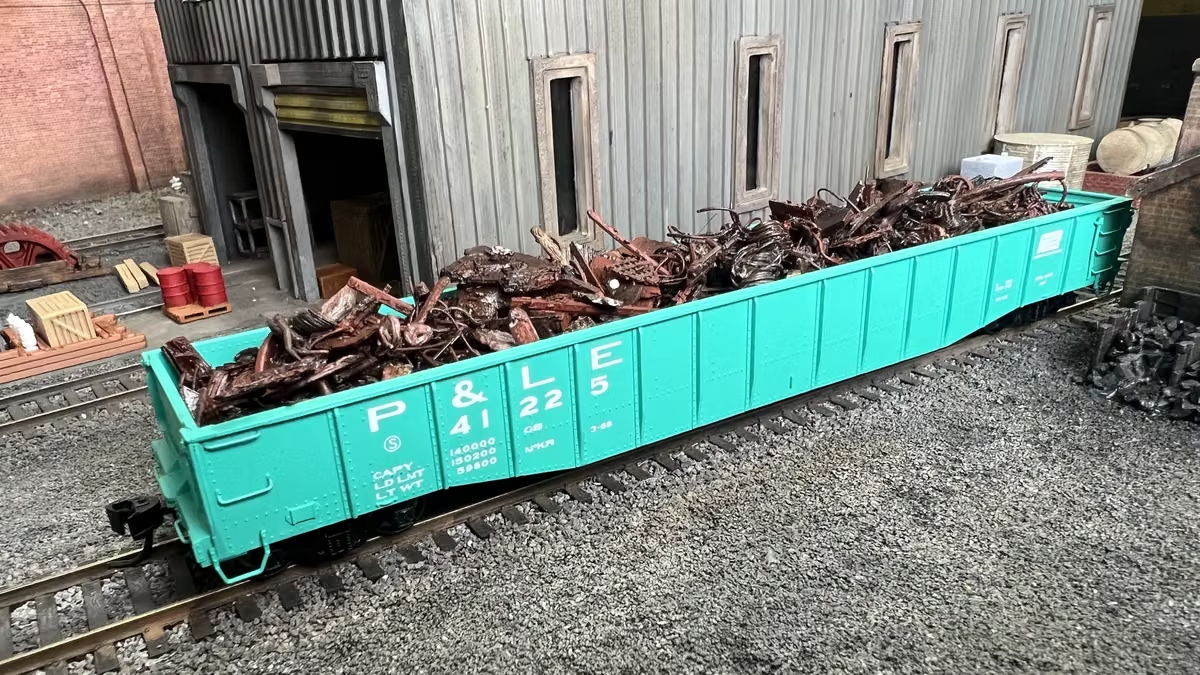
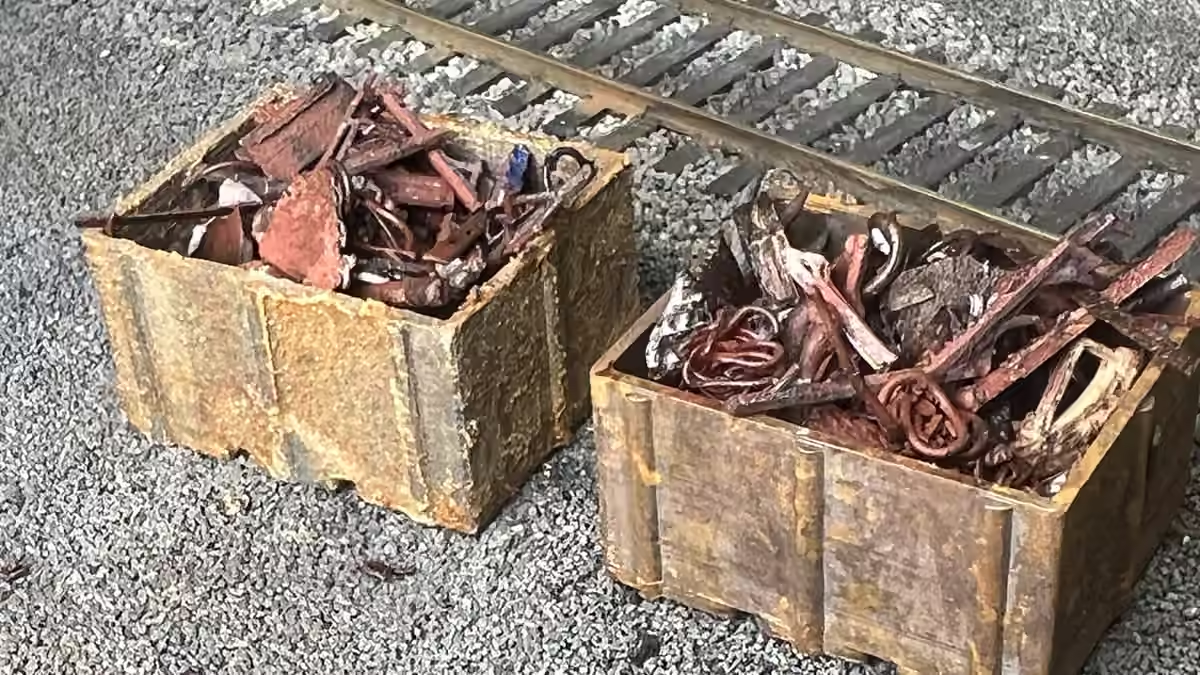
Scrap gondolas are a staple of any industrial-era layout, especially anything modeling a steel mill, foundry, or metal recycling operation. Real scrap loads are chaotic by nature — twisted rebar, sheared plate, crushed car bodies, turnings from a machine shop — which actually makes them more forgiving to model than a precision load, since irregularity is the realistic look.
Aggregate, Coal, and Bulk Materials
Ballast, coal, sand, and other bulk materials are classic gondola loads, particularly on older-era layouts before covered hoppers became standard for many of these commodities. These loads are usually modeled with a lightweight fill material topped with the actual modeling medium (real coal, ballast, or a scenic aggregate) to keep the car weight reasonable while still looking fully loaded to the top of the sides.
Machinery and Odd-Shaped Industrial Loads
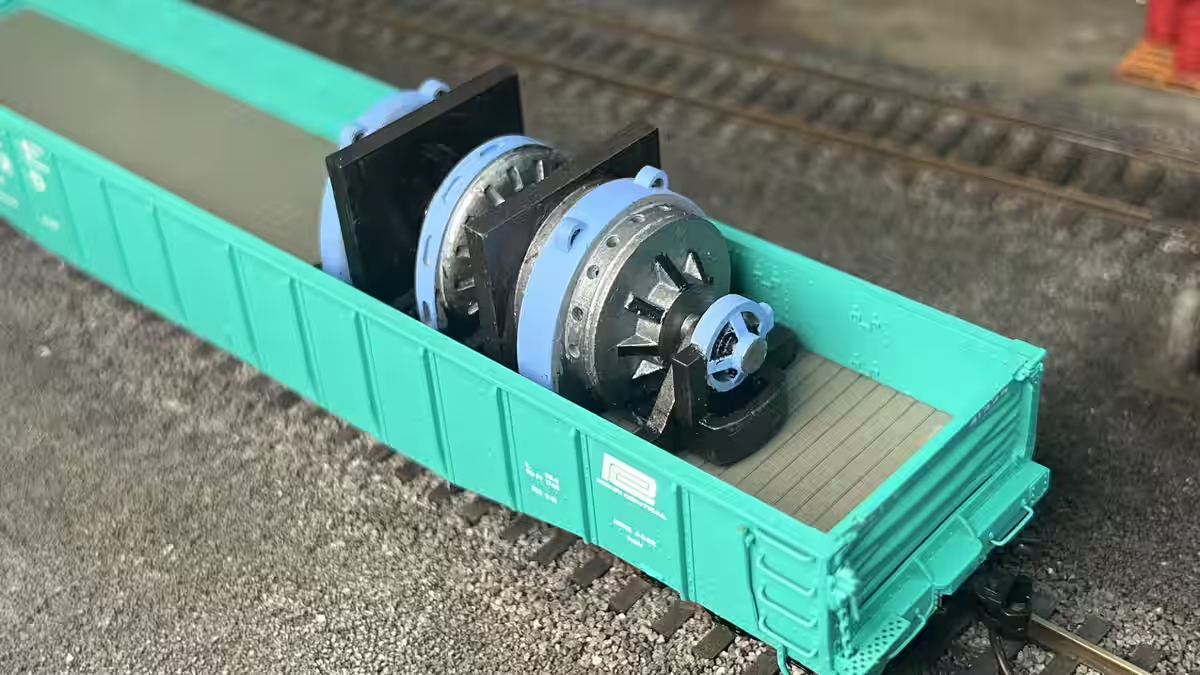
Anything too heavy, too awkward, or too tall for a flat car’s low deck often ends up in a gondola instead, since the side walls help contain and stabilize an irregular load. Large machinery, structural steel, and heavy industrial components in transit between plants are all realistic gondola cargo, especially on a layout modeling a steel mill or heavy manufacturing operation.
Gondola vs. Flat Car: Which Load Goes Where
The short version: if a load needs to be strapped down and visible from all sides for effect, it usually goes on a flat car. If a load is bulky, irregular, or benefits from the sides containing it, it goes in a gondola. Pipe is the interesting exception — railroads and modelers use both, and having a mix of pipe loads on flat cars and in gondolas within the same train is itself a realistic and visually varied choice.
A few practical rules of thumb:
- Pipe and tubular loads: either car type works; gondolas suit larger-diameter pipe better since the sides help retain the stack.
- Scrap and loose/irregular material: gondola, almost always — a flat car has nothing to contain it.
- Single large dramatic loads (transformers, generators, boats, oversized machinery): flat car, so the load is fully visible.
- Bulk material (coal, ballast, aggregate): gondola or hopper, depending on era and commodity.
Choosing Gondola Loads for Your Era and Industry
As with any car load, the right gondola load depends on what your layout is supposed to be doing. A steel mill layout benefits from scrap gondolas moving in and finished product moving out. A layout serving a pipeline construction project or utility company will see a steady stream of pipe gondolas. A more general industrial switching layout can mix loaded and empty gondolas freely, since gondolas move constantly between industries and interchange points regardless of what they’re carrying that particular day.
Modern-era layouts (1990s–present) tend to see fewer bulk commodities in gondolas, as covered hoppers and other specialized cars have taken over much of that traffic — but scrap, pipe, and machinery loads remain common. Earlier-era layouts can lean more heavily into coal, ballast, and general bulk loads without looking out of place.
Weathering and Detailing Gondola Loads
Because gondola loads are visible from above and from the sides, weathering matters more here than almost anywhere else on the layout. A few things worth paying attention to:
- Rust and staining on the pipe or metal itself, especially where pieces contact each other or the car floor.
- Load-securement detail — chains, strapping, and blocking should look like they’re actually doing something, not just decorating the load.
- Consistent weathering between the load and the car — a heavily worked gondola that’s hauled scrap for years should show staining on the interior sides, not just a clean car with a dirty load dropped in.
The ScaleRail3D Gondola-Compatible Range
ScaleRail3D’s Ready To Run pipe loads are specifically designed to work on either a flat car or a gondola, so you can build the mixed pipe-train look described above without extra painting or weathering — each one arrives finished and ready to place straight onto your rolling stock of choice:
- HO Scale Scrap Metal Load (RTR)
- HO Scale Industrial Generator
- HO Scale Large Stacked 40ft Pipe Load (RTR)
- HO Scale Stacked 17ft Pipe Load (RTR)
For scrap-yard and steel mill scenes, the HO Scale Steel Mill Rusty Scrap Metal Bins add realistic naturally-rusted scrap detail to a yard or industrial scene alongside your gondola traffic.
Frequently Asked Questions
What’s the difference between a gondola and a flat car load? A flat car load sits on an open deck with no sides, so it needs its own strapping or blocking to stay secure and look right from every angle. A gondola has low sides that help contain bulk, irregular, or stacked loads, which is why scrap, pipe, and loose material are more commonly modeled in gondolas.
Can pipe loads go on either a flat car or a gondola? Yes — pipe is one of the few loads that’s prototypically correct on both car types. Mixing pipe loads across flat cars and gondolas in the same train is a realistic and visually varied choice.
What’s an easy first gondola load for a beginner? A simple stacked pipe load or a scrap load is one of the more forgiving places to start, since both benefit from irregularity rather than requiring precision painting.
Do gondolas need to be loaded, or is it realistic to run them empty? Both are realistic. Gondolas spend a lot of their working life running empty between pickups, so a mix of loaded and empty gondolas in the same train (or on the same layout) is accurate to real railroad operations.
